OPENING: RENATURE: BILDHALLE ZURICH

NATURE, PERCEPTION, AND MATERIALITY IN
CONTEMPORARY LENS-BASED ART
INKA & NICLAS, JOOST VANDEBRUG, ADAM JEPPESEN
AND DOUGLAS MANDRY
OPEN HOUSE AND DRINKS: SATURDAY, 21 MARCH 2026, 13:00 - 17:00 H
Inka & Niclas, Adam Jeppesen, Joost Vandebrug and Douglas Mandry approach nature not as a static subject but as a dynamic collaborator – fragile, ever-changing and ephemeral. In their work, nature becomes both material and metaphor, explored through diverse processes that push the boundaries and possibilities of photography.
Inka & Niclas FI/SE
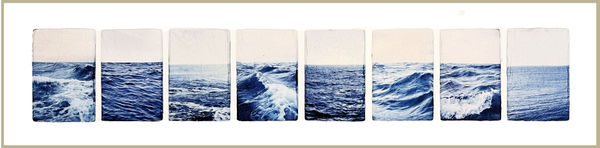
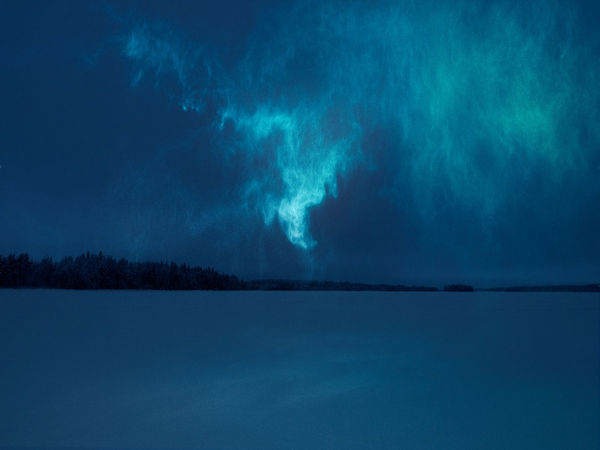
In their lens-based practice, Inka & Niclas delve into the over-consumed and oversaturated portrayals of nature within our visual culture. The artist duo investigates how our relationship with the natural world is shaped – and often distorted – by the camera lens.
Joost Vandebrug NL
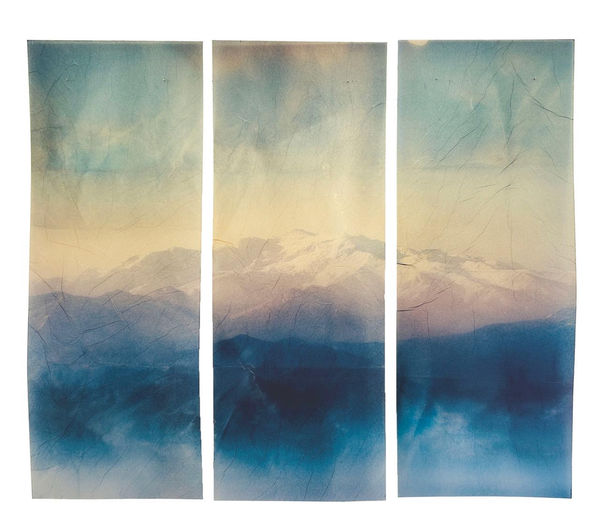
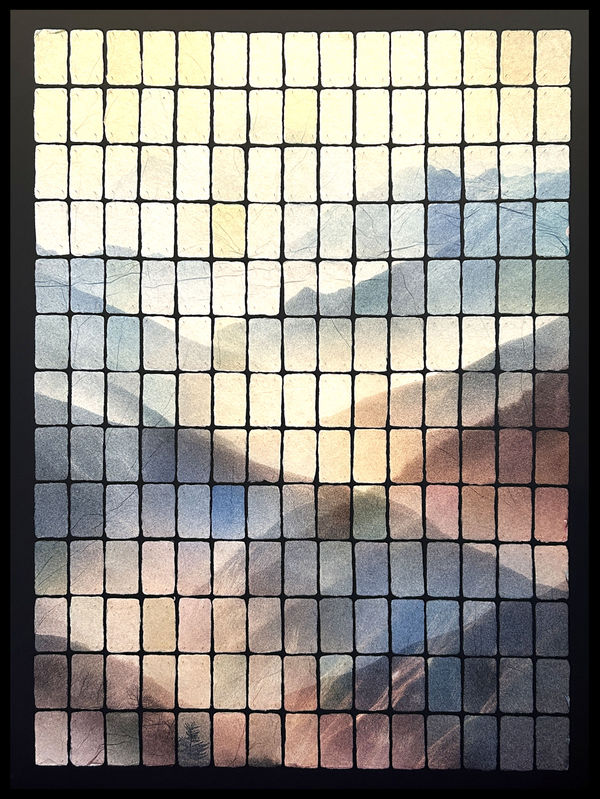
At the heart of Joost Vandebrug’s pracitce lie imagined landscapes composed of fragments of visual memories of different travels and places. His images take shape as quiet, intuitive constructions marked by vulnerability, ephemerality, and the poetry of the everyday. Vandebrug embraces imperfections, treating them as integral to the creative process.
Adam Jeppesen DK
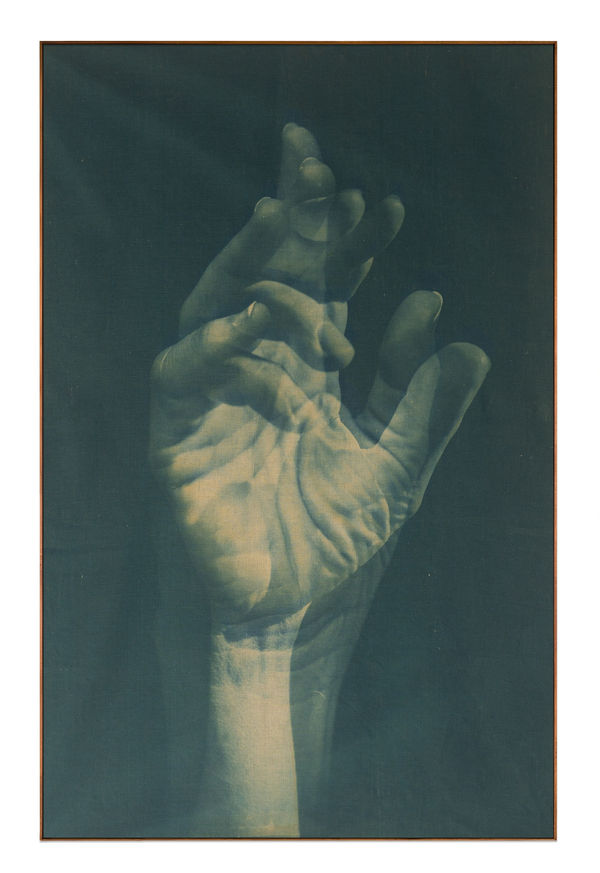
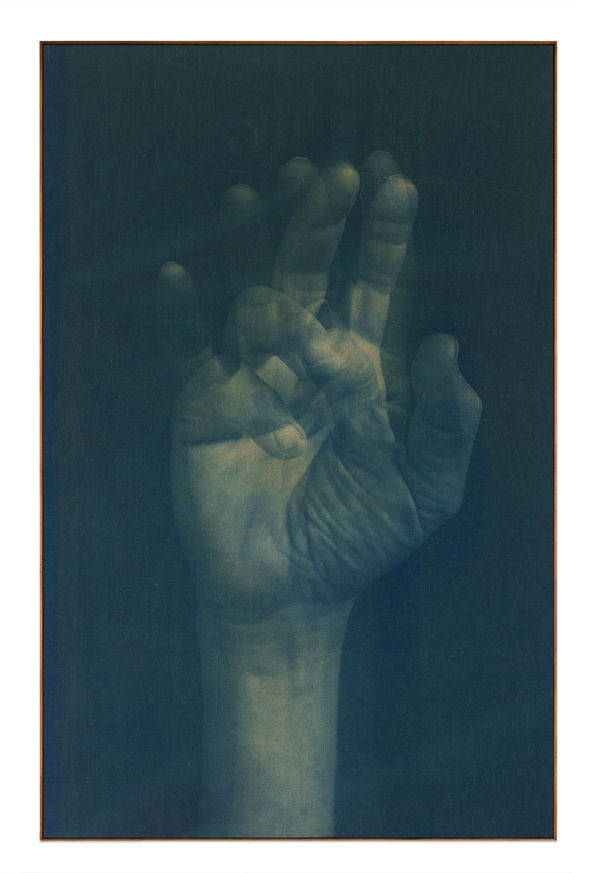
In the series Tanks (2016-present), Adam Jeppesen suspends cyanotype-printed fabric in oil-filled tanks, blurring the line between image and object. His practice consistently pushes the boundaries of photography, approaching the medium not as an end but as a starting point. Where early camera-less photography often halted at the flat image, Jeppesen treats the cyanotype as the beginning of a broader, spatial investigation.
Douglas Mandry CH
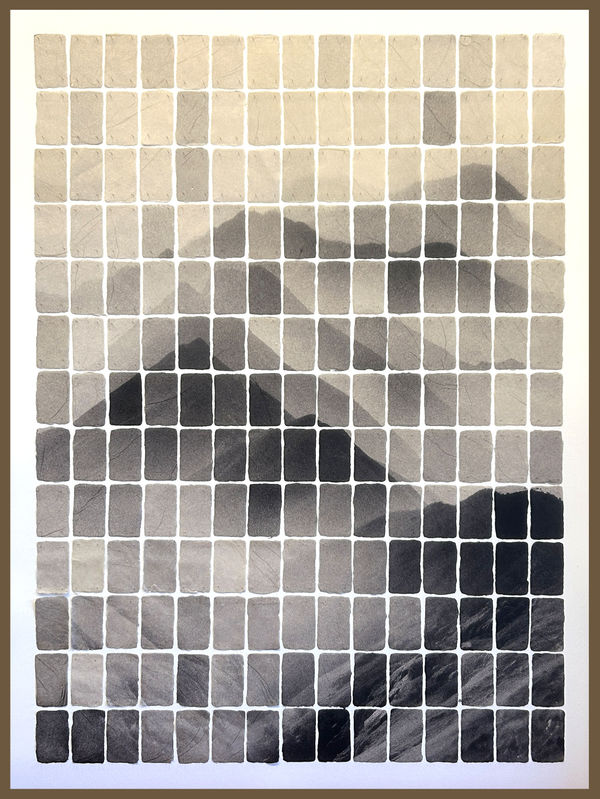
Collecting old images of Swiss glaciers from the early 20th century, Mandry transferred them onto pieces of geotextile through the traditional process of lithography. The fabric had previously been used in the Alps to protect the glaciers during a season on the ice. Thus, fading memories of the Golden Age of Swiss tourism become part of current attempts to preserve a past that no longer exists.
Together, these artists open a dialogue around nature as something seen, shaped, and felt – not merely documented, but transformed. Rejecting permanence and perfection, their works embrace fragility, artifice, and transformation as essential elements of a contemporary visual language.
-
 Inka & Niclas, 4K Ultra HD IX, 2018
 -
Inka & Niclas, 4K Ultra HD XXVII, 2019
-
Inka & Niclas, Family Portrait XIX, 2021
-
Inka & Niclas, 4K Ultra HD I, 2018



-
Inka & Niclas, 4K Ultra HD XXXVII, 2025
-
Inka & Niclas, Echocrome I, 2025
-
Inka & Niclas, G-type Main Sequence I, 2025
-
Joost Vandebrug, 26-29 Triptych, from Moment In Time, 2026


-
Joost Vandebrug, 26-26, 2026
-
Joost Vandebrug, 25-137, 2025
-
Joost Vandebrug, 25-135, 2025
-
Joost Vandebrug, 25-136, 2025


-
Joost Vandebrug, 25-122, 2025
-
Joost Vandebrug, 25-138, 2025
-
Adam Jeppesen, IW North Pole (the walk), from the series Folded, 2015
-
Adam Jeppesen, Work no. 166, from the series The Pond, 2025